
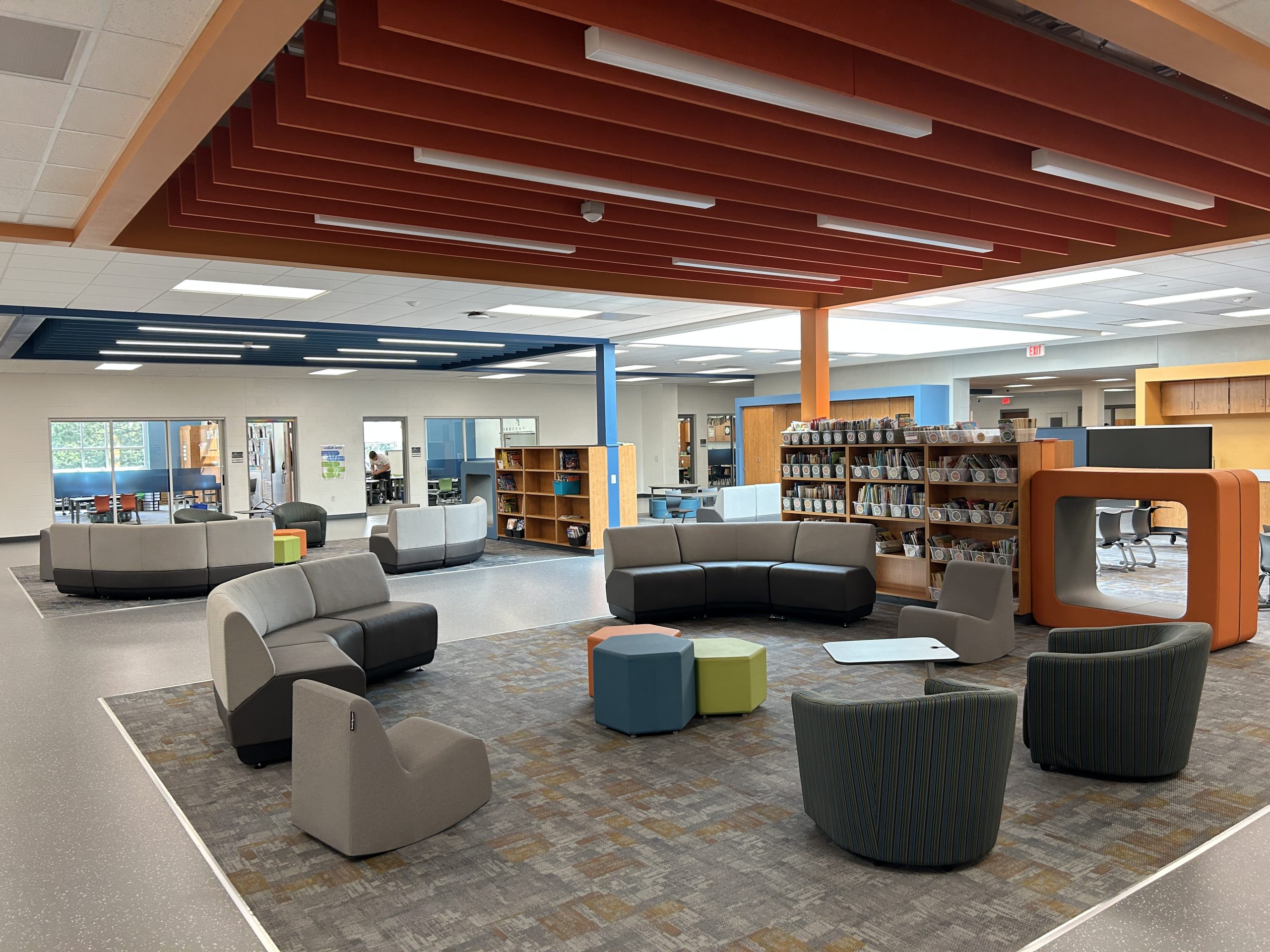
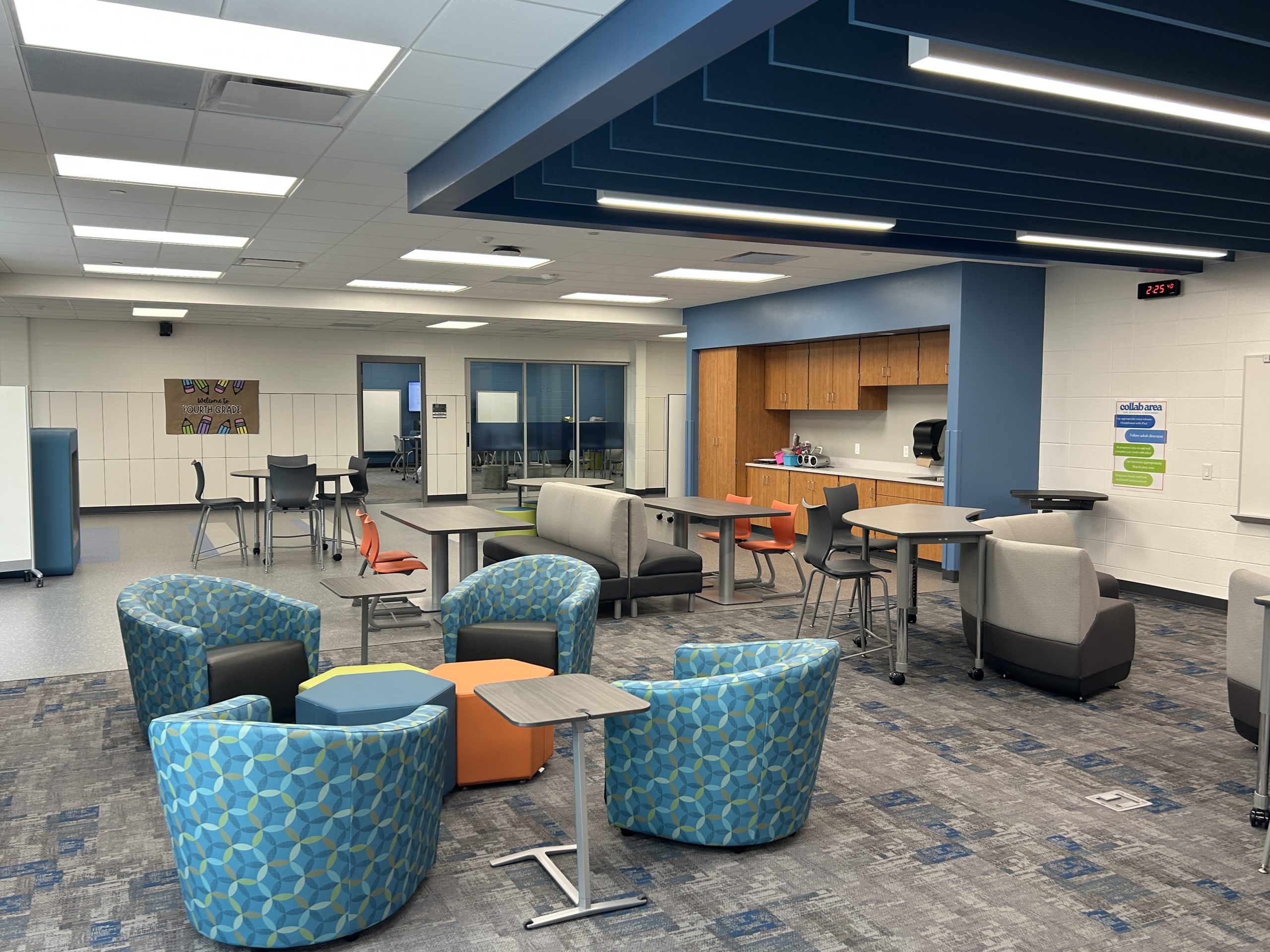
As one of the largest school districts by area in Wisconsin, Pulaski Community School District was driven by rising enrollment and community growth to expand and update two of their elementary schools. Hillcrest and Sunnyside Elementary Schools both underwent renovations and additions to their existing spaces to enhance student engagement and collaborative learning.
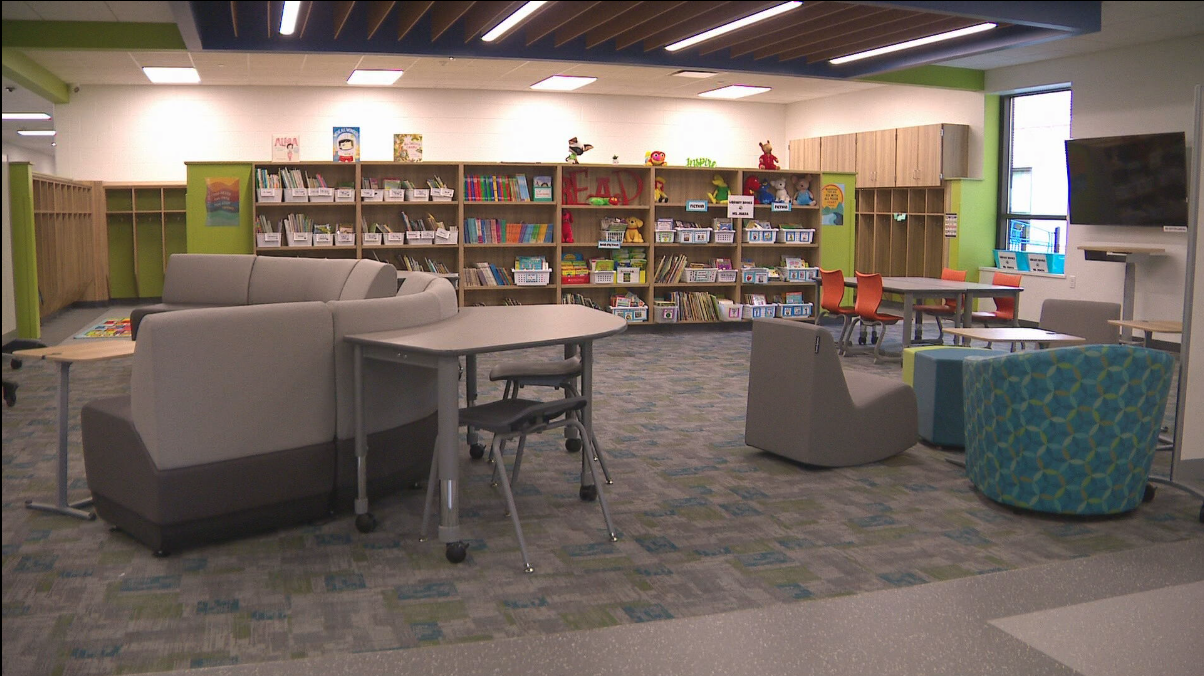
Sunnyside Elementary School
With half of the school on a lower level, the mission for Sunnyside was to bring natural light to impact learning and well-being. The addition of a massive skylight, new windows, and open hallways made the formerly dark classrooms and library feel bright and airy, offering inspiring spaces to learn.
Hillcrest Elementary School
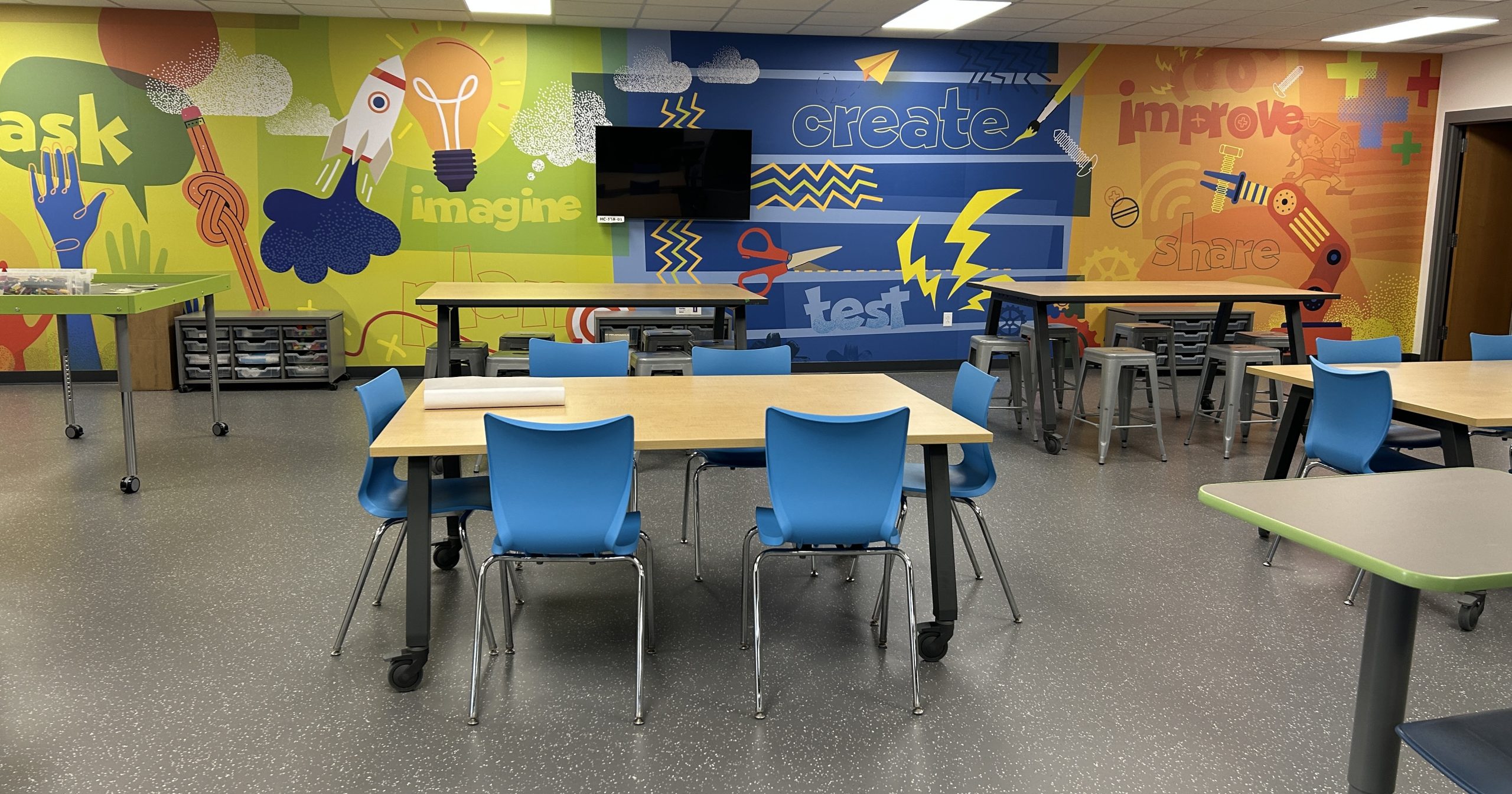
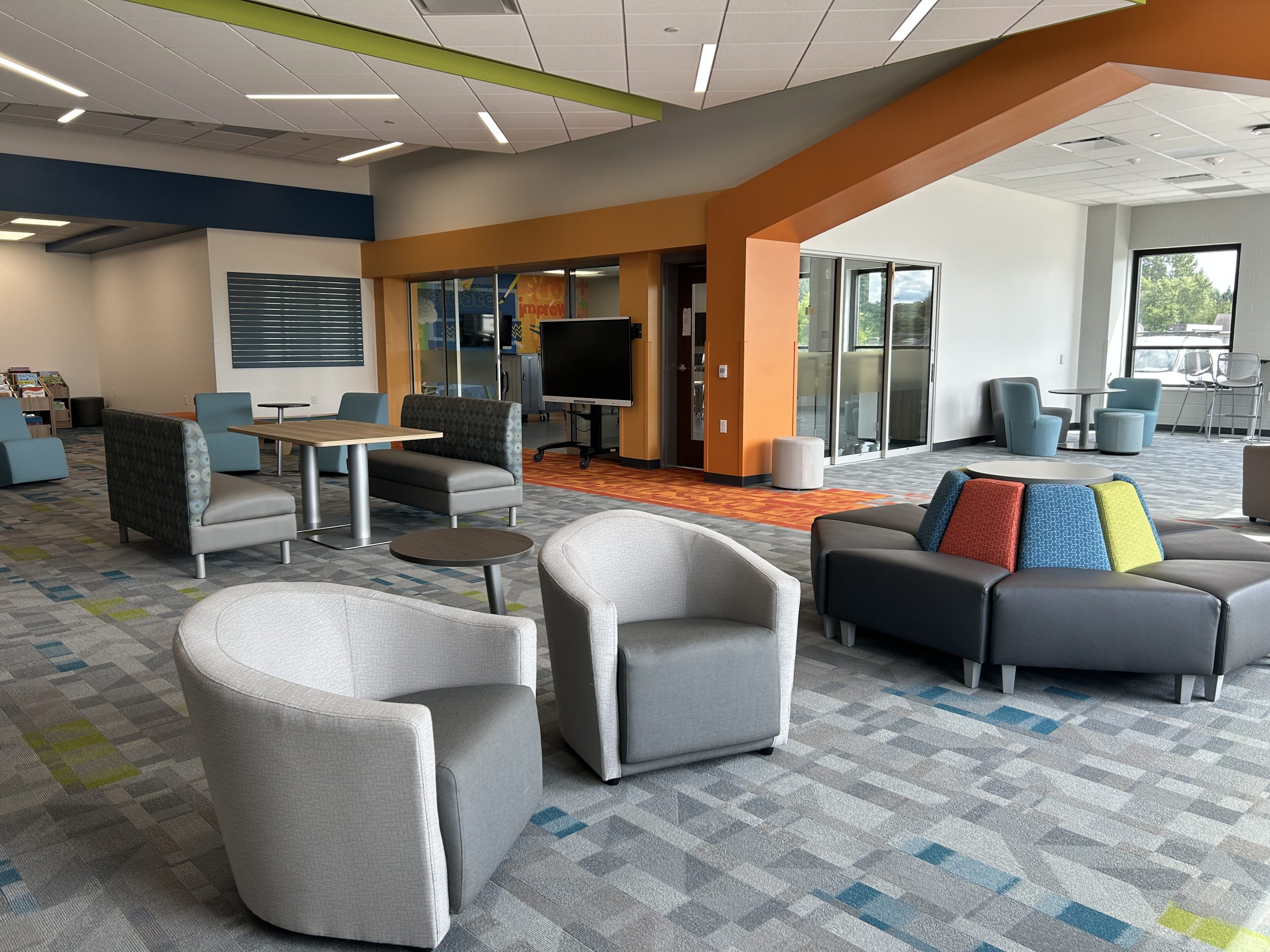
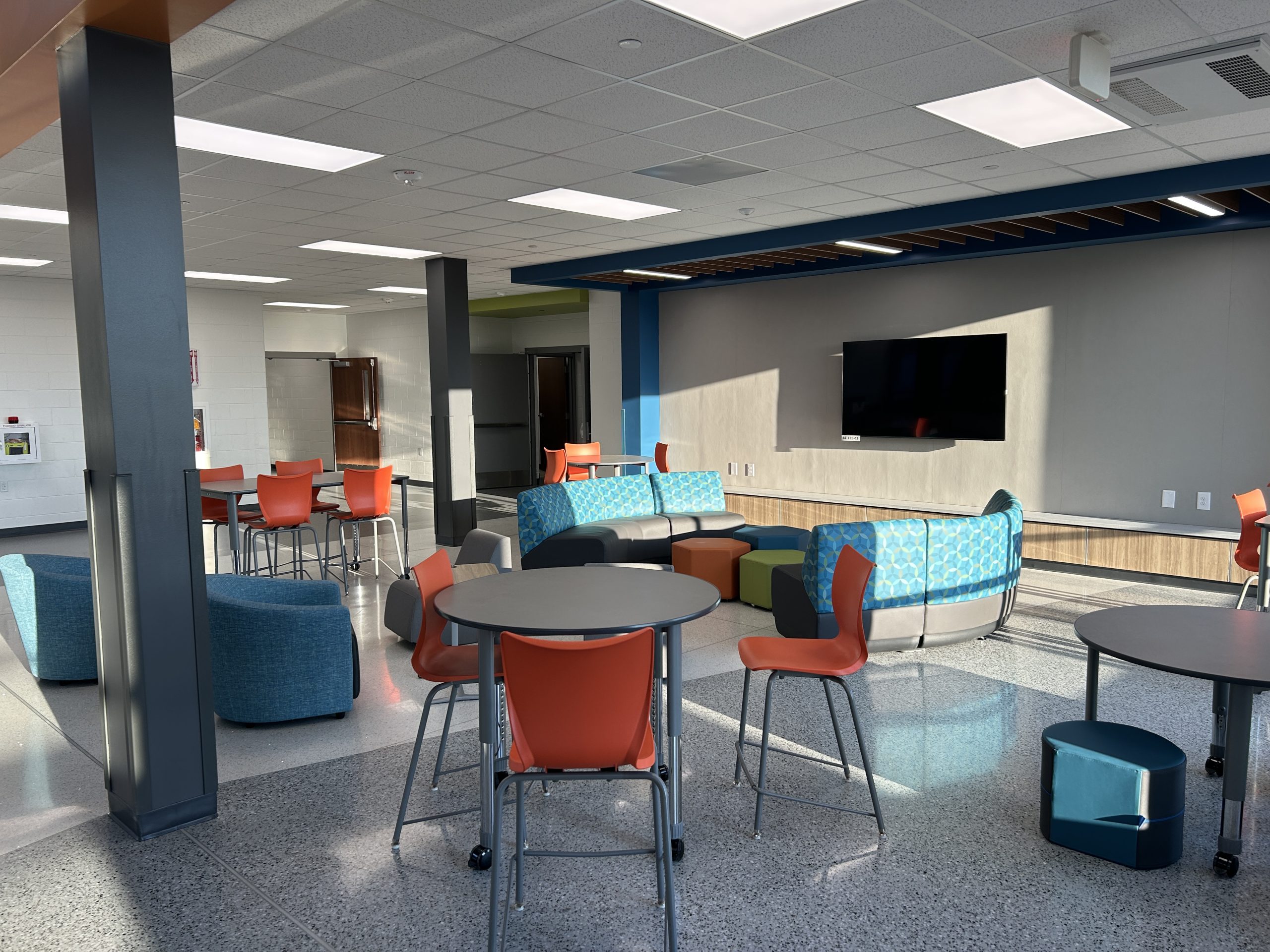
This school gained a new office, cafeteria, library, and gymnasium, along with technology and safety features that provide a more calming and secure environment to learn.
Both schools were shaped by community input and educational research. Atmosphere and Steelcase were thrilled to help the district finalize their vision, sharing research and educational trends, and taking district leaders on a tour of Steelcase headquarters in Grand Rapids, Michigan to try out products, view education environments, and take part in professional development that helped them to develop a plan for moving forward.
Atmosphere followed up with Amy Uelmen, Director of Instructional Technology for Pulaski Community School District, to learn more about the district’s experience working with us.
What concerns did you have in undertaking the furniture planning process? How did Atmosphere alleviate those concerns?
Atmosphere was our thought partner throughout the project. They had been working with us for years on redesigning our learning spaces and we often discussed research, trends, and reflections from our furniture and redesign implementations. We did a 3-year pilot in advance to ensure that the money we were asking taxpayers for was tested, perfected, and matched our vision for teaching and learning. Atmosphere was on the journey with us, often leading us to think creatively and provide knowledge of seating options and materials.
What impressed you the most about working with your Atmosphere team?
They invested in our district: time, attention, and detail. They not only brought ideas to us but also listened to ours and worked toward a common goal, tailored to our student and building needs.
Would you recommend Atmosphere to your peers? Why?
Yes, we do recommend Atmosphere to our peers! We have presented at various local and national conferences and are sure to talk about our positive experience and encourage others to reach out to Atmosphere. They were knowledgeable, friendly, went above and beyond, listened to our needs and acted accordingly, took time to get input from teachers, and quickly learned our style and needs. They then helped us to utilize a variety of vendors to get the products that were right for us.
With any improvement project, the partnership between school district staff and our vendor and service providers strengthens the entire project. We bring different perspectives and knowledge to the planning and implementation which leads to a higher quality outcome!
How did your Grand Rapids experience affect your decision to partner with Atmosphere?
The Grand Rapids experience itself did not propel us to partner with Atmosphere, but the information and knowledge we gained did! We already had a positive experience with Atmosphere prior to the trip, so the trip solidified us making the right vendor choice. It was very nice to be treated professionally!
The ability to see a variety of products in different settings. We saw office space, collaboration spaces – often with people working in them. We got to see classroom environments and have training in them. We got to try out seating to analyze comfort, value, durability, and softness.
What about your experience do you think other districts would be interested in learning more about?
Seeing products and how these products were configured and utilized in different ways and different spaces, from collaboration spaces to small office settings. I know other districts could benefit from the professional development. It was very much centered on creating a vision for why redesign and how the furniture and workspaces can impact student learning. I have seen other districts start with the what and not the why. Having a solid vision for what learning should look like helps determine what furniture, what features in what configuration, and what function is needed. We were very clear about what we wanted based on research, piloting, and having lots of dialogue with students and teachers about it – as a result we were very confident in our referendum as we know we were being good stewards for our students, parents, and community!
Architect: Bray Architects
Contractor: C.D. Smith Construction